
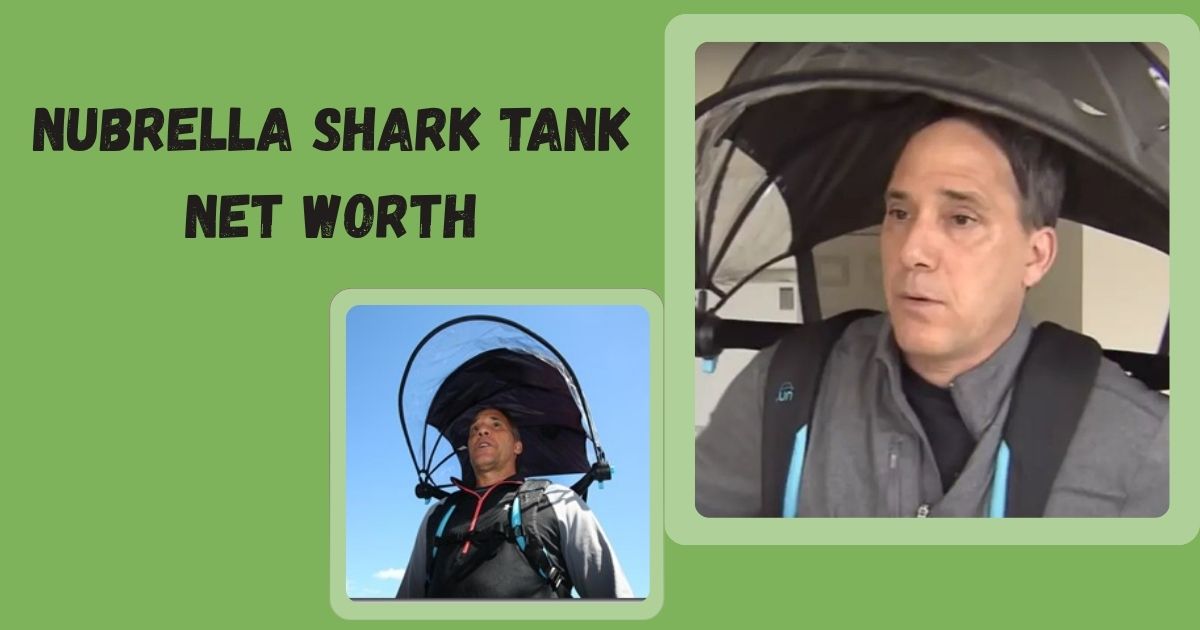

When Alan Kaufman walked into the Shark Tank with a hands-free, wearable umbrella strapped to his shoulders, few people expected it to become one of the most talked-about niche inventions on the show.
Years later, the Nubrella Shark Tank net worth story remains a fascinating case study in what innovation without mass-market adoption really looks like. This article breaks down the full financial picture, including where the brand stands in 2026, what drove its valuation, and what entrepreneurs can learn from its journey.
Profile Summary
| Detail | Information |
| Product Name | Nubrella |
| Founder | Alan Kaufman |
| Founded | Early 2000s |
| Shark Tank Season | Season 1, Episode 110 |
| Ask on Shark Tank | $200,000 for 25% equity |
| Sharks Who Offered | Daymond John & Kevin Harrington |
| Deal Finalized | No (fell through post-filming) |
| Current Status | Inactive (ceased operations 2022) |
| Estimated Net Worth (2026) | $1 million – $2 million |
| Primary Value Source | Intellectual property and brand equity |
Who Is Nubrella? Background & Early Life
Nubrella is the brainchild of inventor and entrepreneur Alan Kaufman, who spent years watching people wrestle with broken, wind-inverted umbrellas on rainy streets. In the early 2000s, Kaufman decided there had to be a smarter solution. His answer was a wearable, hands-free umbrella that rests on the shoulders using an internal support harness, allowing the user to walk freely without holding anything.
The product featured a transparent canopy that wraps around the head and upper body, offering 360-degree rain protection and wind resistance of up to 40 mph. Unlike a traditional umbrella, the ergonomic design distributes weight evenly across the shoulders, reducing fatigue during extended outdoor use. The concept targeted urban commuters, outdoor workers, and anyone tired of juggling bags and an umbrella simultaneously.
Kaufman personally invested approximately $900,000 of his own money into prototyping, testing, and launching the product, a fact that underscores just how much he believed in the idea.
Net Worth Overview (2026 Estimate)
The Nubrella Shark Tank net worth in 2026 is estimated between $1 million and $2 million. This valuation does not reflect active manufacturing or mainstream retail sales. Instead, it is anchored in the brand’s intellectual property assets, patent portfolio, and the residual equity generated from years of direct-to-consumer sales.
Some analysts, looking at peak years of brand visibility and product revenue, place the historical company valuation between $2 million and $5 million. The 2026 figure, however, is more conservative given that Nubrella ceased all active operations in November 2022 following founder Alan Kaufman’s unexpected passing.
Net Worth Growth Timeline
Before Shark Tank
Before appearing on national television, Nubrella’s valuation was largely speculative. Kaufman had poured nearly $900,000 into the venture from personal savings, and the product had limited market exposure. Pre-show revenue was minimal, and the brand relied heavily on word-of-mouth and early e-commerce listings.
Shark Tank Appearance
Kaufman appeared on Season 1, Episode 110 of Shark Tank, seeking $200,000 for 25% equity. The pitch caught the attention of Daymond John and Kevin Harrington, who jointly offered $200,000 for a controlling 51% stake. While the offer was accepted on-air, the deal collapsed during the post-show due diligence phase. Kevin Harrington backed out over concerns about the product’s price point for infomercial-style sales, and Daymond John followed. Despite no finalized deal, the episode delivered enormous brand awareness.
Post-Shark Tank Growth
The Shark Tank effect kicked in almost immediately after the episode aired. Website traffic surged, Amazon listings gained traction, and the product found its audience among niche buyers. Nubrella expanded its distribution to include its official website, Amazon, and select retail stores. The company later rebranded as Canope to refresh its identity and target urban commuters more specifically.
Recent Years (2021–2026)
At its peak, Nubrella reportedly generated annual revenue of approximately $1.2 million, a strong indicator of niche-market staying power. However, the business faced increasing headwinds from limited scalability, low repeat purchase rates (the product is highly durable), and the founder’s health challenges. Operations ceased in late 2022. By 2026, the brand holds value primarily through its remaining intellectual property and continued recognition from the Shark Tank community.
Main Sources of Income
Core Product Sales
Nubrella’s primary income came from direct sales of its signature hands-free umbrella. Premium pricing helped maintain reasonable profit margins, and the product’s uniqueness meant it faced minimal direct competition. Controlled production kept operational costs manageable.
E-commerce Revenue
A significant portion of revenue flowed through online channels, including the company’s official website and Amazon. The e-commerce model kept overhead low while reaching buyers across the United States and some international markets. Third-party sellers on Amazon continued listing remaining inventory even after formal operations wound down.
Licensing & Innovation Potential
While Nubrella never fully monetized its licensing potential during active operations, the patents underlying the product’s design carry real financial value. The intellectual property portfolio represents the most defensible and durable part of Nubrella’s 2026 valuation. Had Kaufman pursued licensing agreements with outdoor gear brands or weather protection companies, the revenue ceiling could have been significantly higher.
Business Strategy Behind the Wealth
Nubrella’s financial strategy relied on several pillars that are worth examining:
- Premium niche pricing to maintain healthy margins without chasing volume.
- Direct-to-consumer focus that eliminated retail middlemen and kept brand control intact.
- Shark Tank exposure used as a marketing engine rather than just a funding vehicle.
- Rebranding to Canope signaled an attempt to align with lifestyle marketing and broaden the appeal beyond weather protection.
- Iterative product improvement based on customer feedback, which helped sustain interest in a niche audience.
The approach was sustainable but never scalable enough to break into mass retail, which ultimately limited the company’s growth ceiling.
Awards & Achievements and Financial Impact
While Nubrella did not amass a trophy cabinet full of industry awards, its cultural impact in the innovation and entrepreneurship space has been notable. The product is frequently referenced in business schools and entrepreneurship blogs as a classic example of a niche innovation that solved a real problem but faced adoption barriers. Its appearance on Shark Tank Season 1 remains one of the more memorable pitches from that era, and the episode continues to be discussed in analysis of early-season Shark Tank inventions.
This sustained recognition has kept the brand’s equity alive long after physical sales slowed, contributing to its estimated 2026 valuation.
Assets & Lifestyle
Intellectual Property
The most tangible and valuable remaining asset connected to the Nubrella brand is its patent portfolio. The hands-free, shoulder-mounted umbrella design is protected by intellectual property rights that continue to hold value even without active manufacturing. These patents prevent competitors from directly copying the design and represent the foundation of any future licensing or acquisition scenario.
Business Operations
At its operational peak, Nubrella maintained inventory, an active e-commerce presence, and a lean team structure. The company operated with minimal overhead, which helped it survive far longer than many Shark Tank products that burned through capital quickly. Post-2022, operations have ceased, though secondary market sellers continue circulating existing inventory.
Brand Identity
The Nubrella brand identity, including its Shark Tank association, wearable umbrella positioning, and the Canope rebrand, constitutes a soft asset that carries name recognition value. In the world of niche consumer products, brand equity built on television exposure can outlast the product itself.
Net Worth Comparison (Shark Tank Products)
| Product | Season | Est. Net Worth (2026) | Deal Finalized |
| Nubrella | Season 1 | $1M – $2M | No |
| Scrub Daddy | Season 4 | $250M+ | Yes |
| Ring Doorbell | Season 5 | Acquired ($1B+) | No |
| Bombas | Season 6 | $100M+ | Yes |
| Tipsy Elves | Season 5 | $125M+ | Yes |
Nubrella’s valuation sits far below Shark Tank’s biggest success stories, but its longevity without investor backing makes it a unique example among Shark Tank failed deals that still survived.
Controversies, Challenges & Financial Risks
Nubrella’s journey was not without turbulence. The primary controversy surrounds the on-air deal that never closed. Kevin Harrington’s withdrawal created confusion for viewers who believed the company had secured investment, and the fallout affected early post-show momentum.
Beyond that, Nubrella faced structural business challenges:
- Low repeat purchase rate: The product’s durability meant customers rarely needed to buy a second one.
- Social acceptance barrier: Many potential buyers felt self-conscious about wearing a transparent dome in public.
- Manufacturing complexity: Producing a structurally unique product at scale proved expensive relative to the market size.
- Limited retail partnerships: Major retailers were hesitant to shelf a niche item with uncertain demand.
- Founder dependency: The business was deeply tied to Alan Kaufman personally, which created continuity risk that ultimately materialized in 2022.
Philanthropy & Social Impact
Alan Kaufman’s entrepreneurial journey was driven by a genuine desire to solve everyday frustrations, a motivation that goes beyond profit. While Nubrella did not operate a formal philanthropic program, the product’s design philosophy had a practical social dimension, helping people with mobility challenges, parents carrying children, and outdoor workers stay dry without losing the use of their hands.
The brand’s story also serves as an educational resource for aspiring entrepreneurs, particularly those building niche consumer products or navigating post-Shark Tank realities without a closed deal.
How Nubrella Makes Money Outside Core Product
Beyond direct product sales, Nubrella’s revenue ecosystem included:
- Amazon third-party marketplace listings that continued generating passive income from existing inventory.
- Brand licensing discussions with outdoor and weather-tech companies, though no major agreements were publicly confirmed.
- Media exposure royalties and affiliate arrangements from ongoing Shark Tank content syndication.
- Canope rebranding opened the door to potential product extensions and urban commuter accessories.
Future Net Worth Projection
Looking ahead, Nubrella’s future financial value rests almost entirely on intellectual property outcomes. If the patent portfolio is acquired by a larger outdoor goods company or licensed to a manufacturer willing to modernize the design, the brand’s value could see a meaningful uptick. A projected range of $2 million to $3 million is achievable if:
- IP licensing agreements are executed with established manufacturers.
- A strategic buyer acquires the brand and relaunches under a modernized identity.
- The wearable weather protection category gains broader consumer acceptance globally.
Without active management, the brand will likely remain a recognizable but static asset, holding value in the low seven-figure range for the foreseeable future.
FAQ’s
What is Nubrella’s net worth in 2026?
Nubrella’s net worth in 2026 is estimated between $1 million and $2 million, primarily based on its intellectual property and brand equity rather than active sales.
Did Nubrella get a deal on Shark Tank?
An on-air deal with Daymond John and Kevin Harrington was discussed, but it collapsed during post-show due diligence and was never finalized.
Is Nubrella still in business in 2026?
No. Nubrella ceased all operations in November 2022 following founder Alan Kaufman’s passing. Remaining inventory may still appear through third-party sellers on Amazon.
Who founded Nubrella?
Alan Kaufman, an inventor and entrepreneur, founded Nubrella in the early 2000s after investing approximately $900,000 of his personal savings into the concept.
Why did Nubrella fail to scale?
Key challenges included low repeat purchases due to product durability, social acceptance barriers, high manufacturing complexity, and limited retail distribution.
What was Nubrella’s annual revenue at its peak?
At its peak, Nubrella generated approximately $1.2 million in annual revenue, primarily through online direct-to-consumer sales and Amazon.
What is Nubrella’s product called after rebranding?
Nubrella rebranded as Canope, aimed at refreshing its market identity and targeting urban commuters more directly.
Conclusion
The Nubrella Shark Tank net worth story is one of the most honest lessons in modern entrepreneurship. Alan Kaufman built something genuinely original, pitched it to the world on national television, walked away without a finalized deal, and still managed to generate over a million dollars in real revenue through sheer persistence. By 2026, the brand’s valuation sits modestly in the $1 million to $2 million range, held together by intellectual property and the enduring recognition that comes from a memorable Shark Tank moment.
Nubrella never became a household name. But it proved something more important: that a niche product with a loyal audience, smart pricing, and a strong IP foundation can outlive the noise of a television appearance. For entrepreneurs studying Shark Tank business valuations, Nubrella remains a case study worth understanding, not for its scale, but for its staying power.

Christopher Davis is the pun-loving voice behind Giggles Magazines, serving quick laughs and clever wordplay with every post. He believes a good pun can brighten any day, and he’s here to prove it. 😄