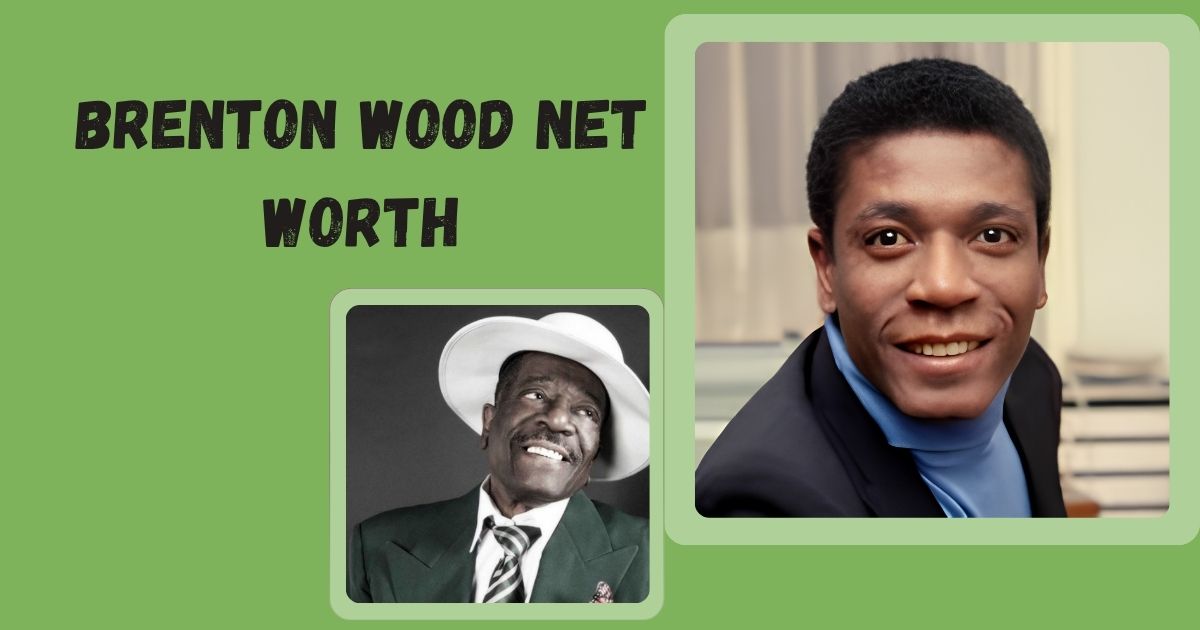

Brenton Wood remains one of the most beloved figures in American soul and R&B history. Even after his passing on January 3, 2025, his legacy lives on through timeless hits, ongoing royalty streams, and a musical catalog that continues reaching new audiences every day. If you have ever wondered about Brenton Wood’s net worth, his income sources, and the financial story behind his six-decade career, this guide breaks it all down clearly and honestly.
Profile Summary
| Detail | Information |
| Full Name | Alfred Jesse Smith |
| Stage Name | Brenton Wood |
| Date of Birth | July 26, 1941 |
| Place of Birth | Shreveport, Louisiana, USA |
| Date of Death | January 3, 2025 |
| Age at Death | 83 |
| Nationality | American |
| Profession | Singer, Songwriter, Pianist |
| Genre | Soul, R&B, Doo-Wop |
| Brenton Wood Net Worth (2026) | $3 Million |
Who Is Brenton Wood? Background & Early Life
Born Alfred Jesse Smith on July 26, 1941, in Shreveport, Louisiana, Brenton Wood grew up as the seventh of eleven children in a working-class household deeply rooted in gospel and community traditions. His family relocated to San Pedro, California, during his childhood, a move that would shape his entire musical identity.
Growing up in Southern California during the golden age of R&B exposed young Alfred to a vibrant musical landscape. He attended San Pedro High School briefly before transferring to Compton High School, where he also excelled as a track athlete. After graduating, he enrolled at East Los Angeles College, where his passion for music deepened under the influence of icons like Sam Cooke and Jesse Belvin.
It was around this time that Alfred Jesse Smith adopted the stage name Brenton Wood, believed to be inspired by the upscale Brentwood neighborhood in Los Angeles, symbolizing his ambitions and aspirations for a bigger life.
Brenton Wood Net Worth Overview (2026 Estimate)
Brenton Wood’s net worth at the time of his death in January 2025 is estimated at approximately $3 million, though figures across credible sources range between $1 million and $5 million. The variation reflects the complexity of accounting for private investments, undisclosed assets, and ongoing royalty income flowing into his estate.
Even in 2026, his estate continues generating revenue through:
- Streaming royalties on platforms like Spotify, Apple Music, and YouTube
- Music licensing fees from film and TV placements
- Catalog sales and digital downloads
- Posthumous merchandise and vinyl sales
His financial legacy, though modest compared to mainstream pop stars, is remarkable for an independent soul artist who navigated an industry that rarely rewarded its pioneers fairly.
Net Worth Growth Timeline
Before Fame
Before his breakthrough, Wood recorded for several small labels with limited commercial success. During this period, his earnings were minimal, relying primarily on local performances and session work around Los Angeles.
Breakthrough Phase
Everything changed in 1967. His debut album Oogum Boogum on Double Shot Records produced back-to-back hits. “The Oogum Boogum Song” reached No. 34 on the Billboard Hot 100 and No. 19 on the R&B chart. Weeks later, “Gimme Little Sign” climbed to No. 9 on the pop chart and cracked the Top 10 in the UK. These two singles alone catapulted Wood into national prominence and generated substantial initial earnings through record sales and touring.
Peak / Recent Years
Wood never stopped working. In 1972, he launched his own label. He released albums through the 1980s and 2000s, performed at retro soul festivals, and maintained a particularly loyal following within the Southern California Chicano community. By 2024, he announced his farewell tour, Catch You On The Rebound: The Last Tour, before his health declined. His music found renewed mainstream attention through sync placements in major productions, significantly boosting his income in his later years.
Main Sources of Income
Core Profession Income
Wood’s primary income engine was always his music catalog. Album sales from Oogum Boogum (1967), Gimme Little Sign (1967), Out of the Woodwork (1986), and This Love Is for Real (2001) generated consistent revenue. As streaming platforms emerged, his classic tracks found entirely new audiences, producing ongoing digital royalties.
Tours / Salary / Business Revenue
Live performance was a cornerstone of Wood’s financial life. Even into his eighties, he toured steadily, appearing at oldies festivals, community events, and soul music celebrations. He also founded his own record labels, Prophesy Records and Mr. Wood Records, giving him greater control over production income and artist revenue that larger labels would have otherwise claimed.
Brand Endorsements & Sponsorships
Wood was not known for major corporate endorsement deals, staying true to his grassroots artistry. However, his deep cultural connection to the Chicano community in Southern California made him a natural ambassador for regional events, radio partnerships, and community-focused campaigns that contributed smaller but meaningful income streams over the decades.
Merchandise & Licensing
Licensing became one of Wood’s most valuable income sources in his later career. “The Oogum Boogum Song” appeared in productions including Almost Famous, The Umbrella Academy, and Don’t Worry Darling. “Great Big Bundle of Love” was featured in the hit series Big Little Lies. Each sync deal brought substantial fees and dramatically widened his audience. Vinyl records, memorabilia, and branded merchandise at live shows added additional layers of revenue throughout his career.
Business Strategy Behind the Wealth
What set Brenton Wood apart financially from many of his soul contemporaries was his decision to operate his own record labels. While he did not retain publishing rights to his earliest hits (those were held by LA disc jockey Art Laboe), he learned from that experience and built infrastructure around his later work.
His strategies included:
- Performing consistently to maintain audience loyalty and ticket revenue
- Embracing retro soul and oldies circuits when mainstream airplay faded
- Pursuing sync licensing deals as film and television demand for vintage soul grew
- Staying connected to the Chicano community, which gave him a reliable fanbase decades after his peak chart years
- Releasing music through independent channels to retain a higher percentage of earnings
Awards & Achievements and Financial Impact
Wood’s career honors directly influenced his financial standing by keeping his name culturally relevant.
- 1967: Three Billboard Hot 100 charting singles in a single year
- 2001: Released This Love Is for Real, demonstrating sustained artistic output
- 2014: Collaborated on a remake of “Gimme Little Sign” with William Pilgrim & The All Grows Up
- 2024: Announced farewell tour, Catch You On The Rebound: The Last Tour
- September 2025: Posthumously inducted into the National Rhythm and Blues Hall of Fame
The Hall of Fame induction in 2025 renewed public and media interest in his catalog, driving fresh streaming numbers and licensing inquiries for his estate.
Assets & Lifestyle
Real Estate
Brenton Wood owned a home in Moreno Valley, California, where he passed away surrounded by family. His lifestyle was consistently described as humble and grounded, prioritizing family life over flashy public displays of wealth.
Cars & Luxury
Wood maintained a modest collection of vintage cars, reflecting his appreciation for classic Americana rather than extravagant modern luxury. Those close to him described him as someone who valued quality and nostalgia over status symbols.
Fashion / Investments
Wood kept a low profile regarding investments, but evidence suggests he directed resources into his music business infrastructure rather than speculative assets. His real estate holdings and music catalog rights represent the most tangible portions of his estate’s current value.
Net Worth Comparison (Peers / Industry)
| Artist | Era | Estimated Net Worth |
| Brenton Wood | 1960s Soul/R&B | ~$3 Million |
| Bobby Hebb | 1960s Soul | ~$1–2 Million |
| Carla Thomas | 1960s Soul/R&B | ~$3–5 Million |
| Jackie Wilson (estate) | 1960s R&B | ~$5 Million |
| William Bell | 1960s Soul | ~$2 Million |
Wood’s estimated wealth sits comfortably within the range of his soul music contemporaries, particularly those who maintained independent careers without major label backing throughout their later years.
Controversies, Challenges & Financial Risks
Wood’s most significant financial setback came early: he did not own the publishing rights to his biggest hits. His classic 1967 catalog was owned by Art Laboe, the prominent Los Angeles disc jockey and record producer. This meant Wood missed out on decades of full publishing royalties from some of the most-licensed tracks of the soul era, a painful but common reality for artists of his generation.
Additionally, his farewell tour in 2024 was derailed when he was hospitalized in May of that year, resulting in lost performance revenue and tour-related income. Health challenges in his final years naturally limited his earning capacity.
Despite these obstacles, Wood demonstrated resilience by building his own labels and continuing to perform until his health simply would not allow it.
Philanthropy & Social Impact
While Brenton Wood was not publicly associated with large-scale charitable foundations, his social impact was real and deeply felt. He became a cultural pillar in the Southern California Chicano community, with his music serving as the soundtrack to generations of weddings, quinceañeras, family celebrations, and community gatherings.
His concerts were often accessible events welcoming working-class fans, and his connection to community radio and public access television programs kept his music available to audiences who could not afford premium entertainment. That grassroots commitment to his community represents a form of philanthropy that statistics alone cannot capture.
How Brenton Wood Makes Money Outside Core Profession
Even beyond direct music income, Wood’s estate continues generating revenue through several supplementary channels:
- Streaming residuals from Spotify, Apple Music, Amazon Music, and YouTube
- Film and TV sync licensing from productions seeking vintage soul sounds
- Posthumous compilation albums and digital reissues
- Vinyl reissues catering to the growing global vinyl revival market
- Tribute events and cover artist royalties whenever artists officially cover his songs
Future Net Worth Projection
In 2026 and beyond, Brenton Wood’s estate is well-positioned to grow in value rather than diminish. His induction into the National Rhythm and Blues Hall of Fame in September 2025 has already sparked renewed critical interest. Streaming data consistently shows that catalog artists benefit from cultural moments, award recognition, and media placements.
| Year | Estimated Estate Value |
| 2025 (at passing) | ~$3 Million |
| 2026 (current estimate) | ~$3–4 Million |
| 2028 (projection) | ~$4–5 Million |
As sync licensing demand for authentic vintage soul continues rising in film, advertising, and streaming productions, Wood’s catalog is likely to appreciate steadily. His estate’s careful management of intellectual property will be the key driver of long-term financial growth.
FAQ’s
What was Brenton Wood net worth at the time of his death?
Brenton Wood net worth at his death in January 2025 was estimated at approximately $3 million, with some sources placing it between $1 million and $5 million.
How did Brenton Wood make most of his money?
His wealth came primarily from record sales, live performance fees, music royalties, and sync licensing deals for film and television placements.
Did Brenton Wood own his music rights?
No, the rights to his earliest and biggest hits were held by Los Angeles disc jockey Art Laboe, which significantly limited his publishing royalty income.
What were Brenton Wood’s biggest hits?
His most celebrated songs were “The Oogum Boogum Song,” “Gimme Little Sign,” and “Baby You Got It,” all released in 1967.
When did Brenton Wood die?
Brenton Wood passed away on January 3, 2025, at his home in Moreno Valley, California, from natural causes at the age of 83.
Was Brenton Wood inducted into any hall of fame?
Yes, in September 2025, Brenton Wood was posthumously inducted into the National Rhythm and Blues Hall of Fame.
Is Brenton Wood’s music still generating income in 2026?
Yes, his estate continues earning through streaming royalties, licensing deals, and posthumous releases, keeping his financial legacy active.
Conclusion
Brenton Wood’s net worth of approximately $3 million reflects a career built on authentic talent, community loyalty, and smart independent business decisions rather than corporate machinery. From his breakthrough in 1967 with “Gimme Little Sign” to his farewell tour announcement in 2024, Wood dedicated his entire life to his craft and his fans.
His story is a reminder that financial success in music is not always measured in chart peaks alone. Longevity, licensing, and cultural relevance are often worth far more over time. With his posthumous Hall of Fame induction and a catalog that Hollywood continues to reach for, Brenton Wood’s legacy, both artistic and financial, is only growing stronger in 2026.

Christopher Davis is the pun-loving voice behind Giggles Magazines, serving quick laughs and clever wordplay with every post. He believes a good pun can brighten any day, and he’s here to prove it. 😄